
What Is the Change Curve?
- The Change Curve
- A psychological model — originally developed by psychiatrist Elisabeth Kübler-Ross in 1969 to describe how terminally ill patients process grief — that has been widely adopted in organisational change management to predict and understand the emotional stages employees go through when faced with significant change.
When a business announces a major restructure, system migration, or cultural shift, leaders often focus exclusively on the technical side of change: the new processes, the timelines, the KPIs. What gets overlooked is the human side — and that is precisely where most change initiatives fail.
Research from McKinsey consistently shows that roughly 70% of organisational change programmes fail to meet their objectives, and the primary reason is not poor planning — it is poor people management. The Change Curve gives leaders a framework to understand where their people are emotionally, so they can provide the right support at the right time.
What Are the 4 Stages of the Change Curve?
While various versions of the model exist, the four core stages most relevant to organisational change are:
Stage 1: Shock and Denial
The initial reaction to any significant change announcement is often disbelief. Productivity typically drops sharply in this stage. Employees may feel confused, numb, or in denial that the change will actually happen. This is not resistance — it is a normal neurological response to perceived threat.
What managers should do: Communicate clearly and frequently. Hold face-to-face sessions wherever possible. Address the “what does this mean for me?” question directly. Do not expect decisions or full engagement during this phase.
Stage 2: Anger and Fear
Once reality sets in, frustration emerges. This stage is emotionally volatile. Employees may blame leadership, feel unfairly treated, or fear for their job security. Performance continues to dip. This is the most disruptive stage and the one where leaders most often make mistakes — either by withdrawing, or by escalating conflict.
What managers should do: Listen actively without being defensive. Use informal one-to-one conversations. Acknowledge feelings without necessarily agreeing with every concern. Make information available through multiple channels. Keep communication channels genuinely open.
Stage 3: Exploration and Bargaining
This is the turning point. Employees begin to accept that the change is real and start to explore what it means for them personally. They may test boundaries or suggest compromises (“What if we just do it this way?”). This stage signals that engagement is returning — performance begins to recover.
What managers should do: Involve people in problem-solving. Create structured opportunities for input. Share project timelines so people can see the road ahead. Celebrate small early wins to build momentum.
Stage 4: Acceptance and Commitment
The individual has worked through the emotional response and is now genuinely committed to making the change work. Energy and performance return to — and often exceed — pre-change levels, particularly when employees feel they contributed to the solution.
What managers should do: Reinforce the new behaviours consistently. Recognise and reward progress publicly. Use feedback mechanisms to ensure the change is bedding in effectively. Begin to build the new “normal” into your team culture.
How Long Does the Change Curve Take?
This varies enormously depending on:
- The scale of the change — a minor process update moves faster than a full restructure
- Trust in leadership — teams with high psychological safety move through stages more quickly
- Prior change history — frequent, poorly-managed change creates “change fatigue” and deepens resistance
- Individual resilience — different people progress at very different rates
As a general guide, teams in a well-managed change programme may move through the full curve in 3 to 9 months. In poorly communicated or forced change, individuals can remain stuck in the anger or denial stage for two years or more.
How to Use the Change Curve as a Manager
The practical power of the model is in using it as a diagnostic tool:
- Assess — Observe team behaviour, tone in meetings, and informal conversations. Which stage do most of your team appear to be in?
- Segment — Individuals will be at different stages simultaneously. Treat them accordingly, not as a homogeneous group.
- Tailor communication — Someone in Denial needs facts and reassurance. Someone in Anger needs to be heard. Someone in Exploration needs involvement. Someone in Acceptance needs reinforcement.
- Track progress — Hold regular informal check-ins and look for signals of progression. Movement through the curve is rarely linear.
Common Mistakes Leaders Make With the Change Curve
- Rushing the process — Telling people to “get over it” does not accelerate the curve; it embeds resistance.
- Treating it as a one-time communication event — Change communication must be ongoing, not a single all-hands meeting.
- Ignoring Stage 2 — The anger and fear stage is uncomfortable, but withdrawing leadership at this point is the single biggest cause of change failure.
- Assuming everyone moves at the same pace — High performers and informal leaders are critical; if they stall in Stage 1 or 2, the wider team will follow.
Related Change Management Resources
- Change Management Process: A Step-by-Step Guide
- Change Management Models Compared
- ADKAR Model Explained
- Situational Leadership: Matching Style to Readiness
- Communication Process Model for Leaders
The following section contains our original overview of the Change Curve stages.
The change curve was Originally created by Elisabeth Kubler-Ross in 1969 to illustrate how people deal with the news that they have a terminal illness.Nowadays this same model is used for any crisis that we as individuals go through. Just as important, it can be used to gauge change and the effect this has on us all as individuals in organisational change management.
As with all models and ideas, it has its challengers and debaters, but nevertheless, it is a respectable tool to use to understand where people are in their journey through change.
In turn this insight can help Managers tailor approaches and effective communication to those individuals dealing with the change, helping them through the transition successfully.
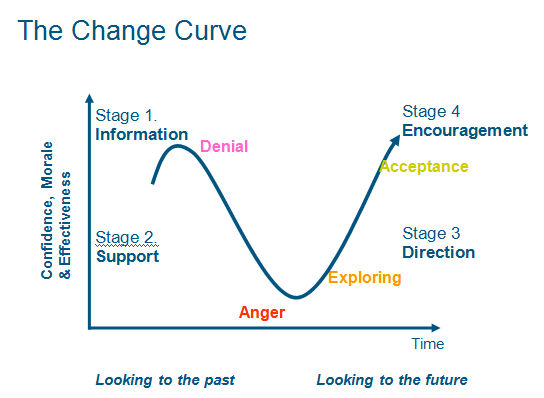
Diagnose the Phases and Tailor Support
As an individual dealing with change, the length of time it takes to successfully go through this curve very much depends on that person: Some can go through quickly, others can take up to two years and more.
The challenge is to help bring people through their own change curve, by understanding which phase they are in and also what support tools they need to transition through and embrace the new change.
The General Phases of the Change Curve
Denial – The first stage: Once information has been received as to the ideals of change, this natural reaction is to deny that there is a need for change and in fact it is not happening. In a change sense, typical words that are used at this stage are, it won’t work here, we have tried it before, Why is this happening to me?
My Advice: Focus on Maximising face-to-face communication and address the “what’s in it for me” issues.
Anger – After learning that this change is not going away, the next natural step towards change is to go through the anger phase. At this point, people affected often cann’tt see a way out of the situation, often resorting to anger and bitterness.
My Advice: Involve yourself in informal channels and use multiple communication forms. Give people time to understand the change, but keep communication channels open.
Exploration – Maintaining the commitment to Working with individuals, facilitating them through the change curve, it will eventually become clear that the change is here to stay. It is no fad and big changes in their lives may need to happen. At this point, people will often try to compromise a favourable outcome to the change. Comments like, “what if we do this”, or “Can I fit here?” or “can we just do this..”
My Advice: Communicate timelines for the project; encourage involvement and allow people total visibility as to what is needed to be done.
Acceptance – Congratulations! The individual has successfully come through the change curve. Acceptance as to the need to change is understood and now the person, in this phase, is learning to live with the change, getting involved in change and dealing directly with it.
My Advice: Repeat and reinforce objectives and strategy; build buy-in and create good feedback mechanisms, including rewarding people and celebrating successes.